
Leader Speak
From execution to infrastructure: AUSIEX’s next chapter
AUSIEX chief executive Patrick Salis on why "specialise and partner" is reshaping financial services, what it will take to bring direct fixed income into the mainstream, and why decumulation is the industry's biggest blind spot.

AUSIEX has evolved from its roots in Australian equities into international markets, fixed income and a broader infrastructure role. Is there an end-state that you’re working towards and how do you define AUSIEX’s place in the Australian investment ecosystem today?
AUSIEX's purpose has long been to connect investors and advisers to the markets and technology they need to create wealth. Through our expansion into international equities and direct bonds, we now provide one of Australia's more comprehensive multi-asset trading and portfolio administration platforms.
We don't think the end-state is to become a supermarket offering every financial product. Our view is that AUSIEX creates the most value by helping advisers, institutions and investors access and manage a broader range of investments efficiently.
Portfolios no longer begin and end with Australian equities. Advisers increasingly need domestic and international equities, cash and fixed income (including direct bonds) to work together, supported by efficient execution, administration and reporting.
We see AUSIEX continuing to evolve alongside those needs. There may never be a fixed end-state because markets, investor needs, regulation and technology will keep changing. Our focus is on building flexible capabilities that help clients adapt to that change without having to continually rebuild the underlying infrastructure themselves.
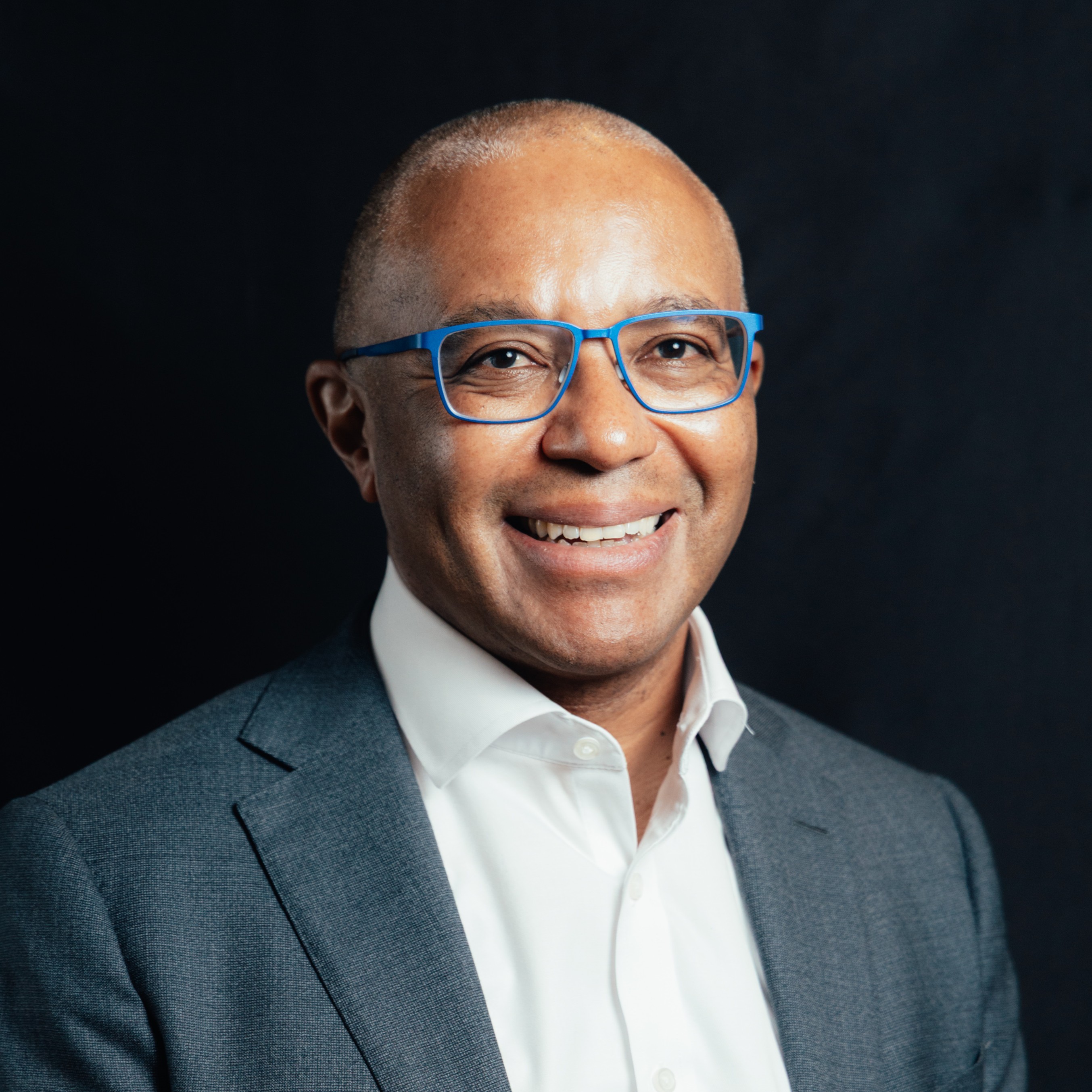
Patrick Salis
Chief Executive Officer, AUSIEX
You’ve spoken about “specialise and partner” as an increasingly important model in financial services. Why is that approach becoming more compelling now, and where do you draw the line between capabilities a firm should own versus access through partners?
Financial services have reached a point where it is now arguably too complex and challenging for one organisation to be exceptional at every part of the value chain. The investment required and the pace of change across technology, cybersecurity, data, regulation and customer experience are simply too great.
To us, “specialise and partner” doesn’t mean outsourcing everything. A business like AUSIEX should own the capabilities central to its purpose, particularly where it carries the risk and must control the outcome. It should partner where another organisation brings genuine complementary expertise.
The practical test is does the partnership remove friction, improve client outcomes and is accountability clear? If it does, it is usually worth pursuing. If it adds complexity and another hand-off, it probably is not.
With AI, APIs and open architecture technology changing so quickly, there are more specialist solutions available than any one firm could sensibly build itself. That is what makes partnering compelling: we can bring the best technology into our offering faster, strengthen the overall solution for clients and stay focused on what AUSIEX does best – delivering execution, clearing, settlement and portfolio administration capabilities and the technology and operational knowledge needed to perform those functions reliably.
AUSIEX operates largely behind the scenes, with advisers, platforms and institutions as its primary clients rather than end investors. Given the breadth of capabilities and assets AUSIEX has assembled, have you considered a strategy that targets the end investor directly?
We continually consider where our capabilities can create the most value, but our focus remains on supporting advisers, institutions, banks and other wealth businesses in a B2B2C model.
Australia already has many businesses competing for investor attention. We think the less visible problem is that the infrastructure behind advice and investment can be fragmented and the opportunity is to make it work better though reliable market infrastructure and governance and technology. Helping advisers and institutions deliver a stronger experience and better portfolio outcomes is the more valuable role for AUSIEX in our industry.
The FIIG acquisition took AUSIEX beyond exchange-traded markets into direct fixed income. What did you see in the Australian market that made bonds strategically important? What needs to change for direct fixed income to become a mainstream part of investor portfolios?
It’s well known that Australian portfolios have traditionally been concentrated in equities, property and cash. In fact, as highlighted in our 2025 paper Understanding Bonds at the Atomic Level, Australian superannuation portfolios allocate around 19 per cent to fixed income, compared with approximately 30 to 40 per cent among the international pension funds included in an OECD comparison.
As more investors enter retirement, we think the limitations of that mix have become clearer, particularly when the priorities shift towards income, capital preservation and liquidity.
Bonds bring different characteristics such as contractual income, defined maturities, varying credit risk and priority over equity in the capital structure. When used appropriately, they can help manage income needs, volatility and timing risk.
For direct bonds to become more mainstream, we believe three things are needed.
The first is better education. Bonds are often presented as overly complicated, even though the basic proposition is quite straightforward.
The second is access. Advisers and investors need to be able to access, research, trade, administer and report on bonds through the systems and fund structures they already use.
The third is implementation support. Advisers need the information required to compare them appropriately with bond funds, exchange-traded products, term deposits and other income investments.
AUSIEX and FIIG will continue to work to achieving these aims through reducing parcel size, investment in platform technologies, education and implementation support for advisers and investors as the focus shifts from accumulation to decumulation.
AUSIEX has argued that Australia’s public equity markets are not converting company formation and economic growth into listed market opportunities as effectively as they could. What do you see as the biggest structural impediments today and what would a healthier Australian capital market look like ten years from now?
Australia certainly doesn’t lack entrepreneurial activity or capital in aggregate. Furthermore, there are significant opportunities in areas such as advanced manufacturing, defence technology, biotech, energy and digital infrastructure.
However our 2024 paper Revitalising Australia’s Equity Capital Markets found that listed public-company numbers fell between 2017 and 2023, while company registrations and superannuation assets grew. New listings have recovered somewhat in 2026 but the market is selective and still remains below longer term figures, so we feel it is fair to continue to ask about how well the path from private formation to public scale is working and the overall quality of the market.
In our view, the barriers aren’t reducible to simply changing a listing rule or one regulatory decision. Listing costs and complexity, limited research and liquidity for smaller companies, the appeal of private capital and the growing options available to companies for raising money offshore should also continue to be reviewed and addressed.
There is also a broader ecosystem issue in that a strong public market needs investors, analysts, brokers, advisers, products, exchanges and policymakers to understand emerging industries and support them through different stages of development.
In ten years, a healthier market would not just mean more listings but a variety of credible equity and debt pathways for businesses of different sizes and sectors, with public and private markets continuing to work together as they do. Success should also be judged by the quality, diversity and durability of the opportunities available to investors.
The Padua partnership moves AUSIEX’s execution and settlement capability directly into the adviser’s workflow. What’s the next part of that workflow that you think AUSIEX should own or plug into, and why?
We think the next major opportunity is the information loop after implementation.
Connecting advice to execution helps solve the “last mile”, but the process does not end once a trade is completed. Once the portfolio exists, the adviser needs reliable information on holdings, transactions, income, tax, performance and risk so they can monitor the strategy and determine whether anything has changed.
This becomes harder as portfolios extend beyond a single platform. A client may hold individual-HIN Australian securities, international investments, cash, direct bonds and assets administered elsewhere. If those positions cannot be viewed consistently, it is difficult to provide genuinely whole-of-portfolio advice.
The next layer is therefore better-connected portfolio administration and reporting, including the ability to incorporate assets that may not be held in the same custody or execution environment.
We believe that more open and non-custodial reporting will become increasingly important because advisers need visibility across the client’s wealth without necessarily forcing every asset into one structure.
This doesn’t mean AUSIEX should own every analytic tool, but our role may be to provide accurate market, transaction and portfolio information back into the workflow, then allow specialist advice, planning and reporting technologies to use it.
You moved from CFO to CEO in 2022 with earlier years in technology and broker services at GBST. How has that path, finance and technology, shaped how you lead AUSIEX today?
I have always felt finance teaches you to ask whether an idea is sustainable. Technology has taught me that sustainability depends on whether the idea can be implemented, integrated and operated at scale.
Market infrastructure I think is a good example. From the outside, a service can look like a piece of software but in practice, it combines technology, operations, regulation, market relationships, capital and people. A sound strategy has to respect all of them.
That background in both finance and technology has probably encouraged a practical leadership style. Strategy certainly matters, but it has to translate into clear priorities, decisions and work for our people and of course tangible results. If it cannot do that, it is essentially still only an idea.
Looking five to ten years out, what change in Australian investing or market infrastructure do you think the industry is still underestimating?
We may be underestimating how much retirement and decumulation will change investment services.
Australia’s superannuation system was built mainly around regular contributions and long-term accumulation. Retirement is different. As a larger group of Australians retire, the system must support people who are drawing income, managing irregular expenses, preserving sufficient liquidity, passing on wealth and remaining invested for an uncertain period.
That is not simply accumulation in reverse. Timing matters more when an investor is withdrawing money, and this will expose the limitations of fragmented infrastructure. Advisers will need a clearer view across superannuation, direct investments, cash, property and other assets.
We think the underestimated change is therefore the combination of decumulation and data. AI can certainly help professionals interpret portfolio information and communicate complex decisions, but the foundation must be complete, reliable data. The system will need to understand the investor’s whole financial position over time, not just record products and transactions.
What keeps you busy outside of markets and AUSIEX? And what’s currently on your reading and/or listening lists?
Outside AUSIEX, family is my priority. My main role in life is as a husband and father. That is what truly matters after all. For a bit of down time, I enjoy reading history, especially about impactful political figures who helped shape the world we live in today. I also enjoy all our football codes without prejudice! I find it is a great way to connect with people.
I do try to stay up to date on business and leadership. At the moment, for example, I’m particularly enjoying podcasts like “In Good Company with Nicolai Tangen”.
Regular exercise is also part of my daily regime, I do a mix of weights, cardio, core strengthening. Focusing on staying mobile and keeping good eating habits to stay in good health.
© 2026 Morningstar, Inc. All rights reserved. Neither Morningstar, its affiliates, nor the content providers guarantee the data or content contained herein to be accurate, complete or timely nor will they have any liability for its use or distribution. This report has been prepared for clients of Morningstar Australasia Pty Ltd (ABN: 95 090 665 544, AFSL: 240892) and/or New Zealand wholesale clients of Morningstar Research Ltd, subsidiaries of Morningstar, Inc. Any general advice has been provided without reference to your financial objectives, situation or needs. For more information refer to our Financial Services Guide. You should consider the advice in light of these matters and if applicable, the relevant Product Disclosure Statement before making any decision to invest. Our publications, ratings and products should be viewed as an additional investment resource, not as your sole source of information. Morningstar’s full research reports are the source of any Morningstar Ratings and are available from Morningstar or your adviser. Past performance does not necessarily indicate a financial product’s future performance. To obtain advice tailored to your situation, contact a financial adviser. Some material is copyright and published under licence from ASX Operations Pty Ltd ACN 004 523 782.
Legal Notices Privacy Policy Regulatory Disclosures Global Contacts